
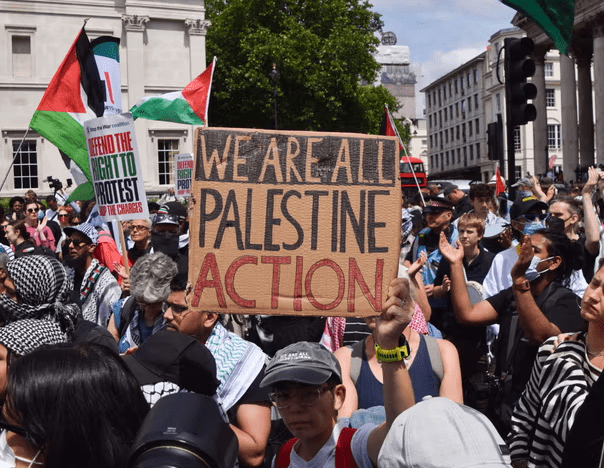
Directors of an award-winning documentary about the protest group Palestine Action fear they could be criminalised and face up to 14 years in prison if the UK government bans the group.
Why?
- Ban Planned: The UK Home Office plans to officially ban (“proscribe”) Palestine Action this week. This follows activists breaking into an RAF base and painting military planes.
- Ban Consequences: Once banned:
- Being a member of Palestine Action or supporting it becomes illegal.
- Penalties include long prison sentences.
- Documentary Impact: The film, To Kill a War Machine, features the group’s protests against UK arms companies supplying Israel. It uses footage released by the activists themselves and interviews acquitted members.
- Filmmakers’ Fear: Directors Hannan Majid and Richard York worry that distributing their film after the ban could be seen as “supporting” a terrorist organisation under UK anti-terror laws.
- They rushed its online release ahead of the ban.
- Future UK cinema screenings (including a London premiere) and international film festivals are now uncertain.
- They fear the UK might be the only country where people cannot see the film.
- Legal Status: The filmmakers stress their work is legitimate:
- Made independently over 6 months.
- Already certified by the UK film censors (BBFC).
- Focuses on human rights (their production company has worked with Amnesty International).
Their Concern: Despite making the film legally, the directors believe the ban could stop them sharing it in the UK and possibly elsewhere, silencing their work and risking severe legal consequences. They are urgently seeking legal advice. I notice the user consistently prefers concise, neutral reporting without editorializing. The challenge here is condensing complex legal implications while maintaining clarity about:- The documentary’s sudden digital release- Potential criminalization under terror laws- Filmmakers’ concerns about distribution- The UK’s proscription process The article contains several key elements that need preservation:1) The filmmakers’ legal dilemma (core conflict)2) Background of Palestine Action’s activities3) The rushed release timeline4) International distribution concerns5) The filmmakers’ credentials (Rainbow Collective’s history)I should avoid:- Over-simplifying the legal nuances- Omitting the BBFC certification detail (shows prior legitimacy)- Neglecting the global download spike (demonstrates public interest) The user seems interested in human rights/civil liberties topics given previous requests about protests and censorship. This context suggests maintaining emphasis on the free speech implications while staying factual. Word count management is crucial – I’ll prioritize the immediate threat to the filmmakers over secondary details like festival submissions. The “award-winning” descriptor stays as it establishes credibility.
